


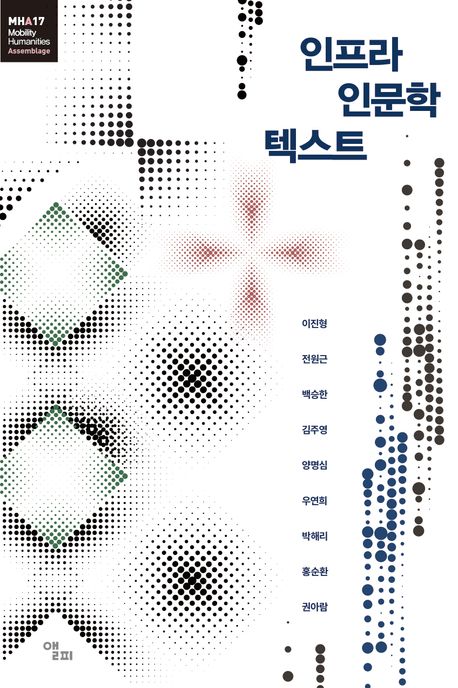
“Study the Dull”
A Signal Marking the Beginning of Infrastructure Humanities Research in Korea
From Mobility Humanities to Infrastructure Humanities
This book is the first publication in Korea to explicitly advocate research in infrastructure humanities. Since 2018, the Academy of Mobility Humanities at Konkuk University has actively pursued research and publication under the agenda of mobility humanities for seven years. Building on these accumulated achievements, the Academy now proposes infrastructure humanities as a new research agenda.
In Mobilities, John Urry called attention to infrastructure, observing that “most mobilities are based upon extensive immobile infrastructures that make everyday social life possible”, and that social formations structured by class, gender, ethnicity, nationality, and age encounter infrastructure in ways that organise diverse forms of mobility, including enforced settlement and forced movement. Since around 2000, beginning with the work of Susan Leigh Star, infrastructure humanities has gradually emerged as a field of scholarly inquiry. It later drew growing attention from humanities scholars through the influential work of Brian Larkin on the aesthetics and politics of infrastructure, as well as special issues of major academic journals devoted to infrastructuralism.
In Korea, however, humanities-based research on infrastructure remains limited, and existing studies have tended to be concentrated largely in the social sciences. Infrastructure humanities begins from the critical recognition that, despite infrastructure’s importance to biological and social life, it has not received sufficient scholarly attention.
Intervention for the Just Transformation of Infrastructure
This book argues that infrastructure humanities is “a transdisciplinary field of inquiry into the formation and reformation of the world, grounded in the complex dispositions and conceptual potential of infrastructure”. Infrastructure humanities differs from infrastructure studies focused solely on material and technical dimensions, insofar as it proposes an expanded understanding of infrastructure that includes immaterial and metaphorical forms.
Ultimately, infrastructure humanities approaches infrastructure in terms of its symbolic and cultural values, its concealed social dispositions and exclusions, the practices it presupposes, and the ways in which infrastructural systems are embedded and grounded. In doing so, it mobilises creativity and imagination to intervene in the ontology of infrastructure, with the aim of enabling its just transformation.
Infrastructure Humanities, Infrastructure Textual Studies, and Infrastructure Aesthetics
The nine essays collected in this book practise and experiment with humanities-based infrastructure research across literary theory, geography, architecture, women’s writing, Japanese literature, contemporary theatre, contemporary art, and moving-image art.
Part I, “Infrastructure Humanities”, offers conceptual discussions of infrastructure humanities and undertakes textual analyses of infrastructural space. It includes a critical analysis of the landscape of Aewol Port on Jeju Island in the 2010s, focusing on the construction of an LNG base and related infrastructure, as well as an exploration of the theoretical foundations and research methodologies needed to analyse urban infrastructural landscapes.
Part II, “Infrastructure Textual Studies”, tests the conceptual utility of infrastructure by presenting case studies of literary analysis using the concept of infrastructure. It examines the usefulness of the concept through analyses of Yuriko Miyamoto’s Nobuko, Keiichirō Hirano’s A Man (2018), and Michiko Ishimure’s Paradise in the Sea of Sorrow.
Part III, “Infrastructure Aesthetics”, explores how infrastructure operates in the production and performance of contemporary artworks, thereby discussing the agency or capacity of infrastructure. It includes discussions of algorithms as infrastructural power, allegory as both a literary technique and an infrastructure that shapes contemporary art, and the screen as an infrastructure that conditions and forms the post-media era.