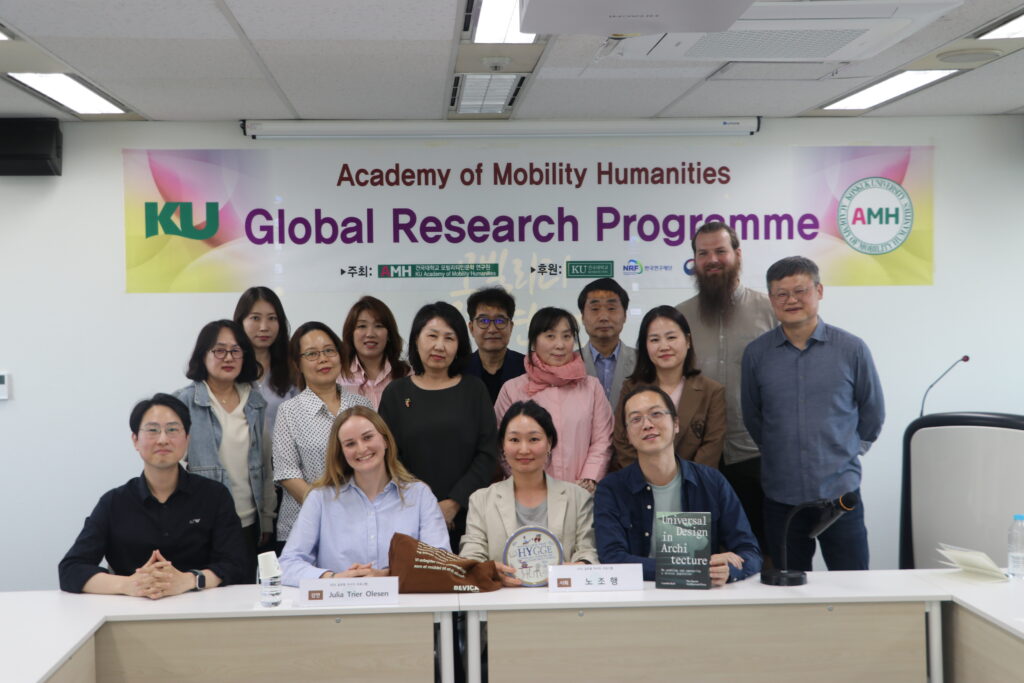
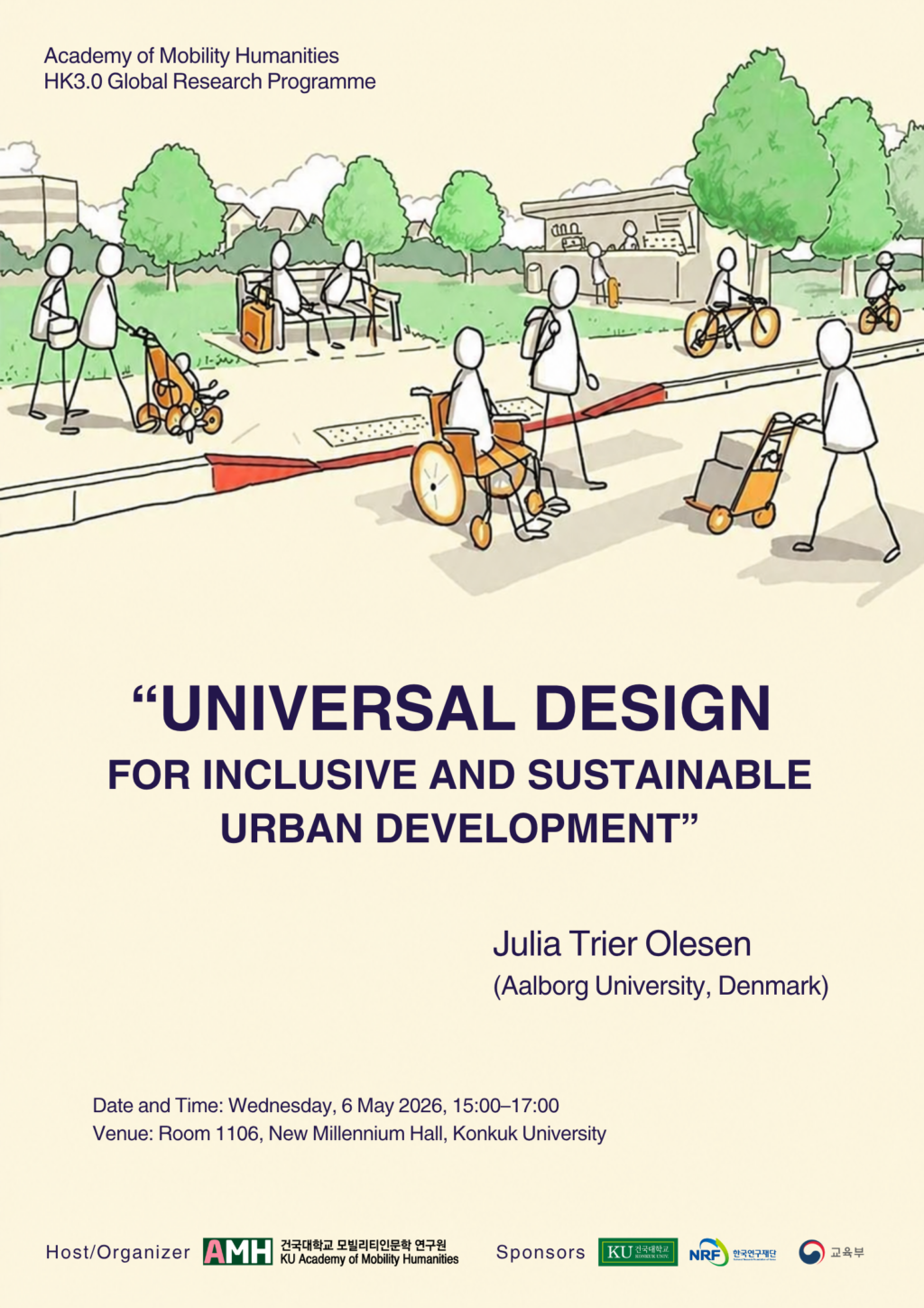
As part of its Global Research Programme, the Academy of Mobility Humanities held a special lecture, inviting Julia Trier Olesen, an early career researcher at Aalborg University in Denmark, to share her latest research.
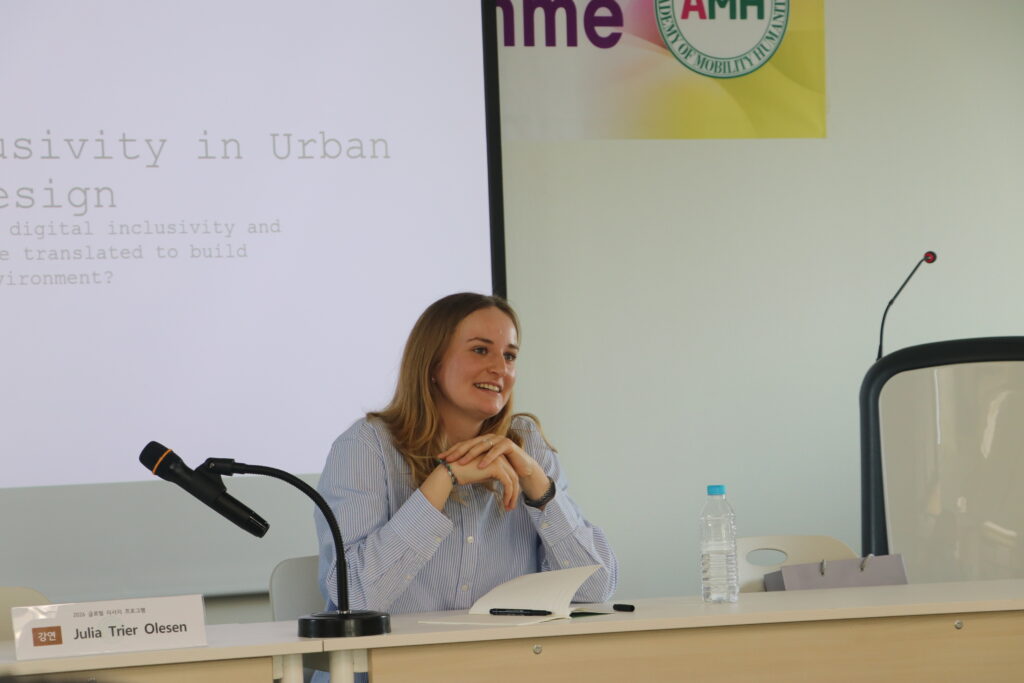
Olesen gave a presentation on the theme of “Universal Design for Inclusive and Sustainable Urban Development”. In her lecture, she analysed the physical and spatial barriers that older adults, people with disabilities, and socially vulnerable groups encounter in urban environments, and explained how participatory design and community-based approaches can contribute to the creation of inclusive urban environments.
The discussion focused in particular on ways of applying digital inclusivity to urban design. Olesen emphasised that digital technology can do more than serve as a mere convenience: it can play a role in expanding the accessibility and use of physical space. By way of example, she introduced a case in which the accessibility features of a mapping service supported route-finding for wheelchair users, and she suggested the potential for such technology to develop in ways that reflect a range of user needs, including care, safety, and spaces for rest.
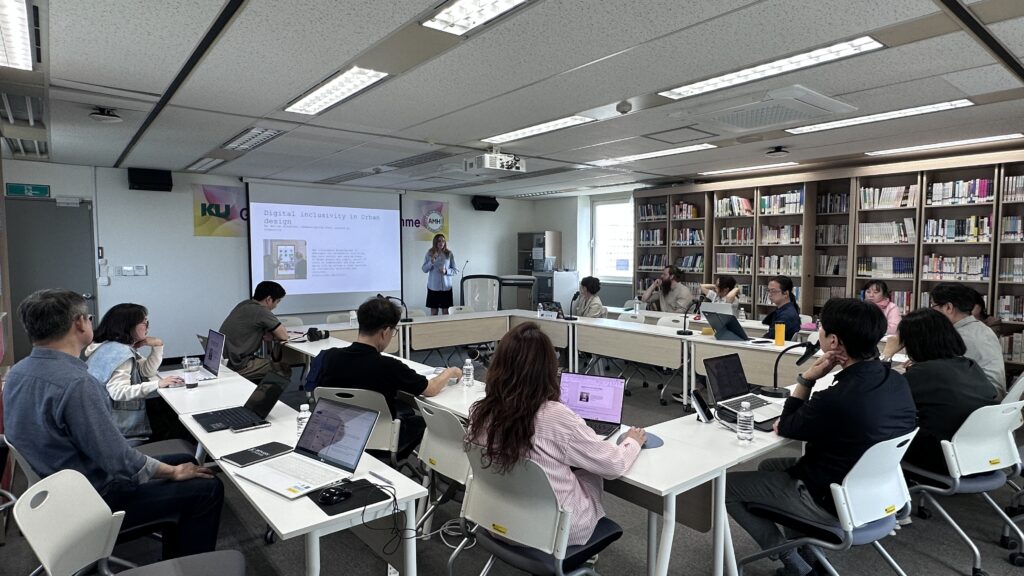
She went on to explain the distinction between accessibility and universal design. Whereas accessibility focuses on establishing minimum standards for particular groups, universal design aims at design that takes all users into account; the two approaches, she explained, work in a complementary manner and can together contribute to the creation of a more inclusive urban environment.
The lecture was a meaningful occasion for sharing examples of Danish and Nordic research on urban design and inclusivity with researchers in Korea. The Academy of Mobility Humanities plans to continue expanding its exchanges with overseas researchers through its Global Research Programme, and to further promote international collaborative research grounded in Infrastructure Humanities.