Reading Infrastructure, Thinking through Texts
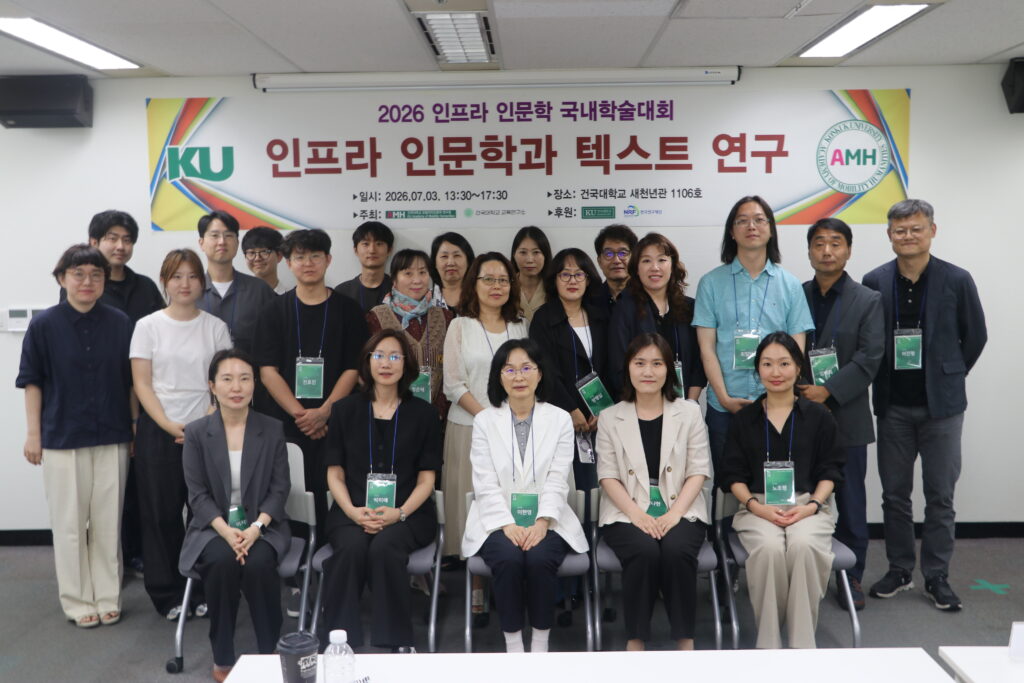
The Academy of Mobility Humanities, in collaboration with the Konkuk Education Research Institute, held the 2026 Infrastructure Humanities Conference to explore the expanding possibilities and future-oriented vision of Infrastructure Humanities. Under the theme “Infrastructure Humanities and Textual Studies,” the conference provided an opportunity to reconsider literature, art, and the city from the perspective of infrastructure and to explore the new direction for research in Infrastructure Humanities.
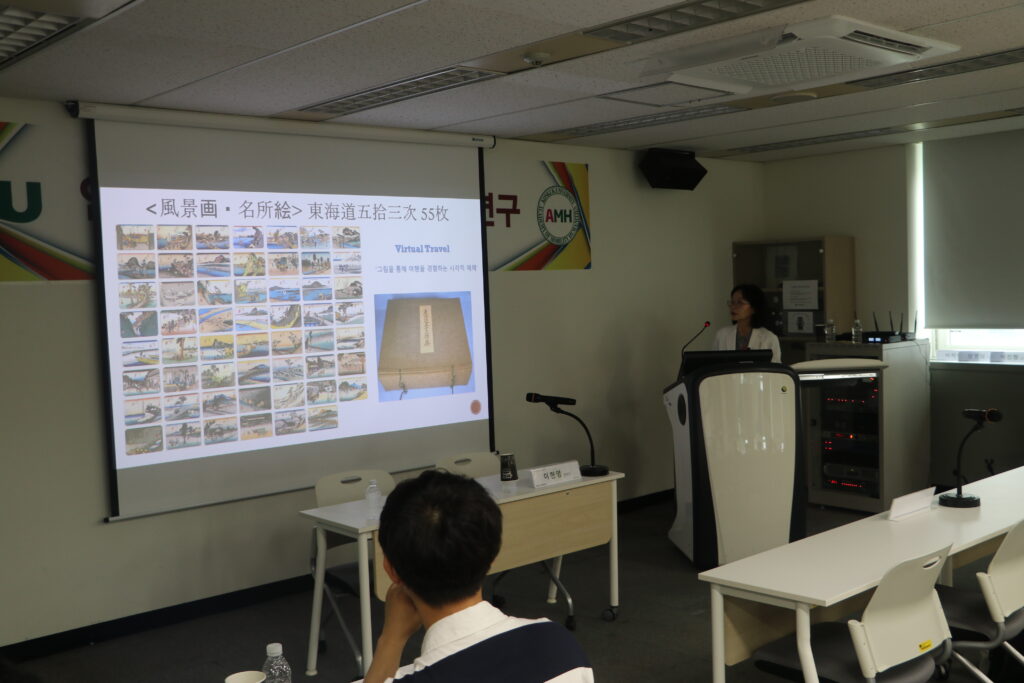
In the keynote, Hyunyoung Lee of Konkuk University presented “The Cultural Representation of Mobility Infrastructure in Utagawa Hiroshige’s Tōkaidō Gojūsan Tsugi (The Fifty-three Stations of the Tōkaidō).” Moving beyond conventional interpretations centered on landscape painting, Lee reconsidered Utagawa Hiroshige’s work from the perspective of mobility infrastructure and suggested that transport infrastructure such as post stations, roads, and bridges constitutes a cultural landscape in which politics, culture, sensory experience, and the environment overlap.
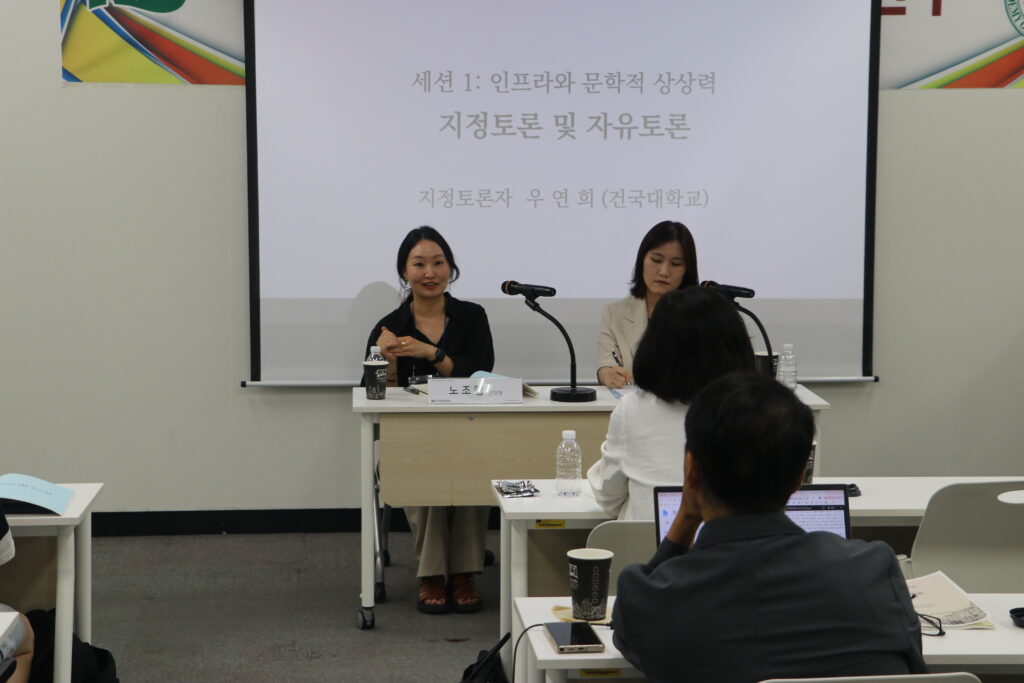
In Part 1, “Infrastructure and the Literary Imagination,” Johaeng Rho of Konkuk University, focusing on the film Hamnet, analyzed how Shakespeare functions as a form of cultural infrastructure that connects and reproduces emotion and memory across historical periods. His presentation was titled “Affective Circulation and Shakespeare as Infrastructure: Rereading Catharsis in the Film Hamnet.” Na-hyun Kim of Chungbuk National University then focused on the work of ecological poet MoonJae Lee, reading the city as a sensory and cultural text and examining how urban infrastructure organizes human experience and perception. Her presentation was titled “The Poetics of Urban Infrastructure.”
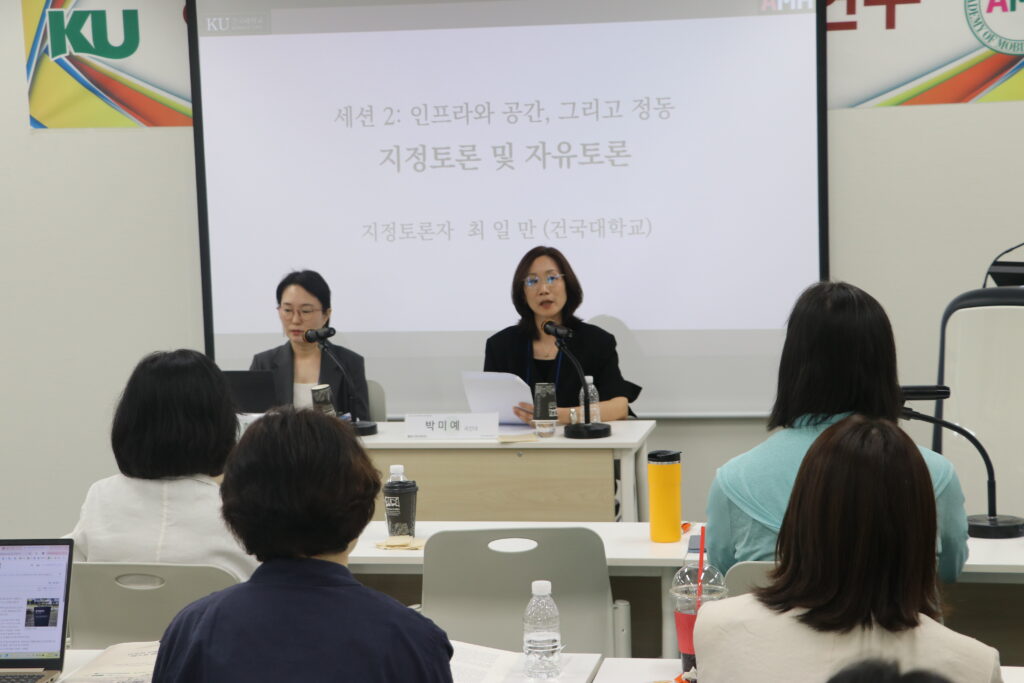
In Part 2, “Infrastructure, Space, and Affect,” Jihyun Lee of Pusan National University analyzed the urban infrastructure of colonial Busan as an apparatus of power that organized mobility and residence, enjoyment and exclusion, and examined how its influence continued to shape citizens’ sensory experience and everyday life after liberation. Her presentation was titled “Felt Hierarchies: Colonial Urban Infrastructure and the Spatial Production of Affect.” Miye Park of Kookmin University then identified governance as central to public art and proposed a new direction for public art as an infrastructure that creates urban placeness through the participation of citizens and local communities. Her presentation was titled “Public Art as Urban Place-Making Infrastructure.”
Inseop Shin, Director of the Academy of Mobility Humanities, said, “Infrastructure is both a condition that makes human life possible and a foundation that shapes how we understand the world. I hope this conference will serve as an opportunity to further expand the methodologies of Infrastructure Humanities for reading literature, art, and the city as a text.”