


Nam June Paik (1932–2006)
Korean-American artist
Founder of video art, performance artist, thinker, and composer
In 1970, Nam June Paik, together with engineer Shuya Abe, introduced the first Paik-Abe Video Synthesizer, and by 1972, they had created three versions in total.
In 2011, the Nam June Paik Art Center restored an educational version of the synthesizer that functioned identically to the original.
The video synthesizer, which could transform the shape and color of input video images while accepting additional feedback signals, allows us to explore the early processes of analog image synthesis.
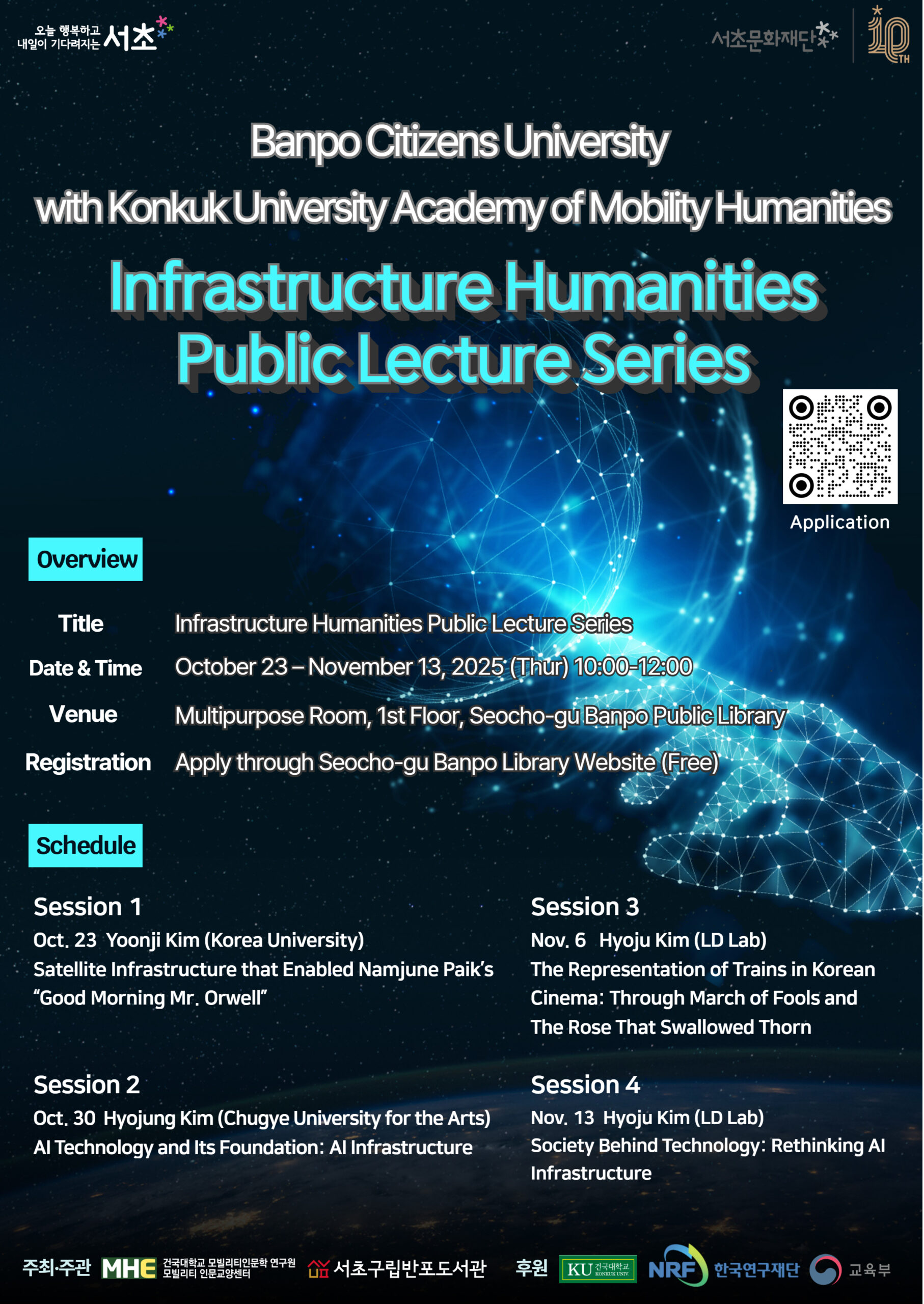
Good Morning, Mr. Orwell was the world’s first live satellite broadcast art show, conceived by Nam June Paik. It aired on January 1, 1984 (U.S. time). The title Good Morning, Mr. Orwell was a playful rebuttal to George Orwell’s novel 1984, which predicted that people would live under domination by mass media such as television. Nam June Paik boldly expanded the boundaries of art, subverted existing ideas, and pioneered a new artistic realm through the fusion of infrastructure and technology. By presenting radically original creations, he established an entirely new artistic genre distinct from all that came before. He was a true pioneer, developing technological tools and methodologies while continually challenging conventions. Although his works often involved cycles of resistance, destruction, and experimentation, they never lost their delicate harmony and artistic sensibility. Between lightness and gravity, comedy and destruction, the original and the transformed, Paik’s art opened up a space for imagination and reflection.