


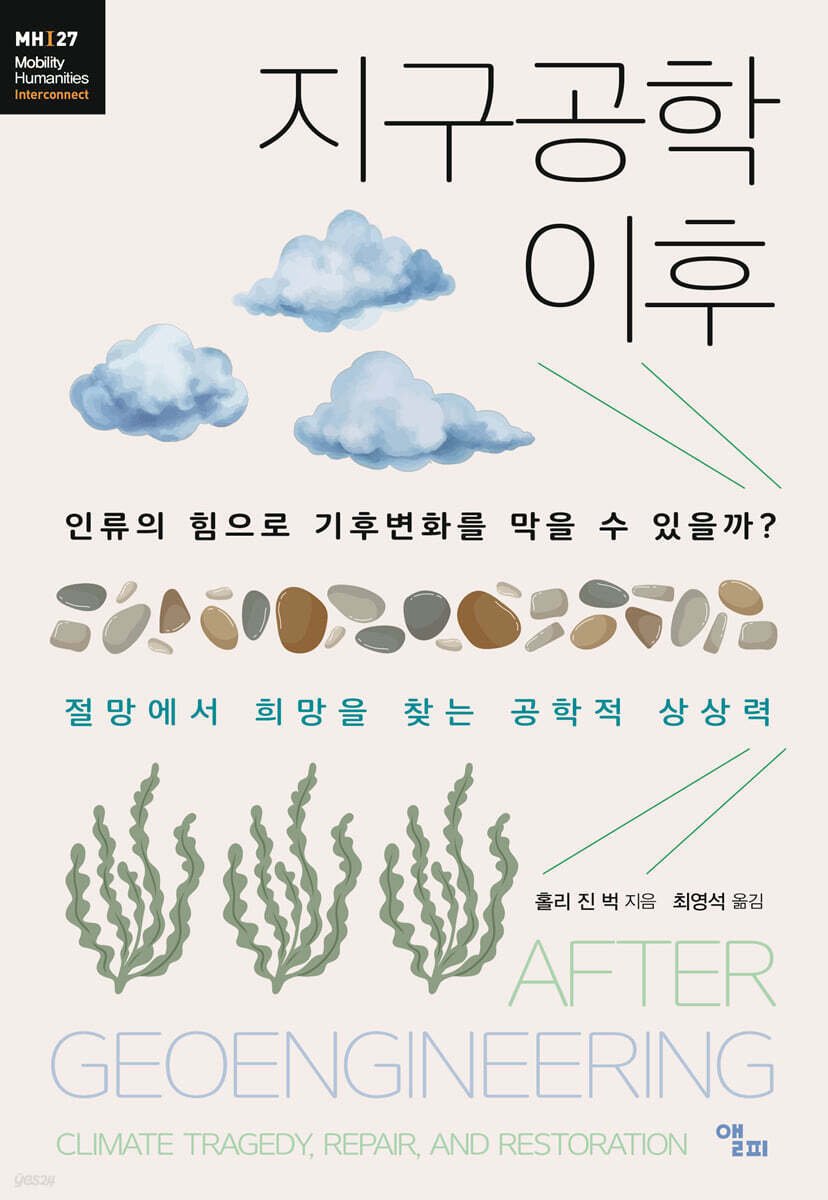
After Geoengineering: Climate Tragedy, Repair, and Restoration
Is Artificial Climate Control Possible?
Engineering Imaginations Finding Hope amid Despair
The first serious, full-scale discussion of redirecting sunlight back into space
The key word of this book is geoengineering. The ultimate aim of geoengineering is to respond to climate change through artificial climate control. Although it remains still at the level of ideation, this book imagines a future in which solar geoengineering, which has lingered in the shadows of climate policy discussions for over a decade, becomes normalized, and it explores what the world after geoengineering might look like.
The most frequently discussed geoengineering approach is stratospheric aerosol injection, which involves dispersing particles into the stratosphere, above the altitude of commercial aircraft, in order to block 1–2 percent of incoming sunlight. These aerosols would not merely reduce the amount of solar radiation reaching the Earth; by scattering sunlight, they would also alter the color of the sky itself. The sky would become whiter, and the life of plants and phytoplankton would be affected as a result. …
The most frightening scenario is one in which governments resort to geoengineering in a last-minute response only after climate change has already delivered devastating shocks. Arguments suggesting that we should wait and see whether carbon removal will be necessary are dangerously complacent. Once solar geoengineering begins, ever-greater quantities of particles would need to be continuously released until carbon emissions are reduced. The true challenge, therefore, lies not in initiating the project but in ending it. In other words, the task is to ensure that the world remains livable after geoengineering. This is precisely the most contentious and insufficiently examined issue in most discussions of geoengineering.