


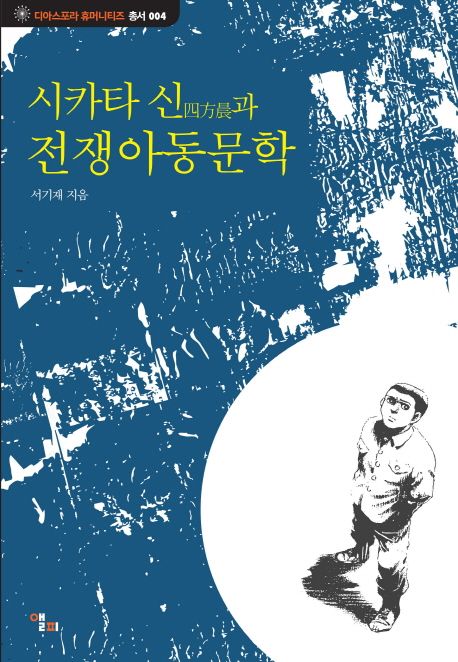
Diaspora Humanities Series, Vol. 4
This book explores the formation and development of war children’s literature, a literary genre distinctive to Japan that combines children’s literature with war literature, as well as the life and literary world of a Japanese writer who made a decisive contribution to the emergence of this new genre. It is virtually the only full-length monograph devoted to this field. War children’s literature, the central subject of this book, is a deeply problematic genre in which issues of war diaspora, colonial diaspora, and child diaspora are intricately entangled.
The Japanese writer Shikata Shin (しかたしん), who played a pivotal role in establishing and developing this genre, was born and raised in colonial Korea during the Japanese imperial period and later became a writer in Japan and, therefore, is himself a diasporic figure who wandered across multiple and overlapping boundaries. As a true “outsider who carried war and colonialism within himself,” the literary world he pursued illuminates an enduring question of the human community: coexistence with the other.
The book consists of ten chapters. Chapters 1 through 3 examine the foundations of Shikata’s literary formation, surveying the state of Japanese children’s literature up to the emergence of children’s literature dealing with war, and situating Shikata’s work within that context. Chapters 4 through 9 offer a critical analysis of his children’s literature as an expression of his life as an outsider. The final chapter, Chapter 10, presents translated accounts of Shikata’s own lived experiences that formed the background of his writings. Throughout the volume, tables summarizing the mid-twentieth-century Japanese literary landscape are included, providing valuable assistance for understanding trends in modern and contemporary Japanese literature.