


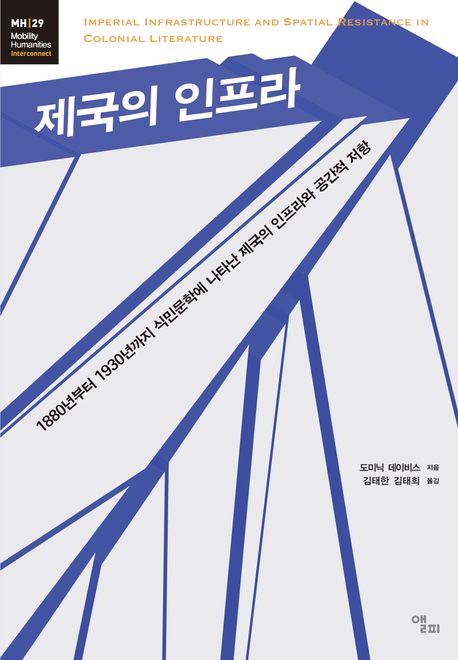
Reading Infrastructure in Colonial Literature
This book traces the dialectic between imperial infrastructure and spatial resistance primarily through colonial literature written by white authors who were propagandists or apologists for the British Empire, or who were otherwise involved in colonial projects in South Asia and Southern Africa. The book describes this methodical approach as “infrastructural reading.” This approach analyzes representations of infrastructure in literary texts, such as depictions of roads and railways, in order to expose the weak points of infrastructures of the texts, namely the material conditions that produced them. Through this method of infrastructural reading, the author seeks to transform colonial literature into a contrapuntal map of imperial power. In doing so, the book demonstrates how the global expansion of infrastructure over the half-century from 1880 to 1930 was materially and imaginatively intertwined with the growing instability and eventual disintegration of the British Empire.
Violence and Resistance under Capitalist Underdevelopment
The concept of “infrastructural reading” captures concrete moments of violence that occurred in the colonial periphery and shows how such spatial conflicts refracted larger upheavals and pressures within the broader world system. Literature is by no means incidental to this configuration. In analyzing diverse forms of resistance to imperial infrastructure, the book emphasizes the spatiality of anti-colonial insurgencies as they appeared in both overtly violent and nonviolent forms, and it extends this framework to encompass the spatial contradictions generated by uneven capitalist development. Spatial resistance, therefore, is linked not only to material contradictions, such as the concentration of labor in strategic nodes of the world system, but also to cultural contradictions, including the loss of colonial fantasies of the frontier as a redemptive landscape capable of resolving social and environmental tensions within imperial metropoles such as Britain.